To our shareholders,
Thank you for joining us on an extraordinary journey in Southern Africa. Today, we are in the midst of truly monumental achievements following 25 years of industry-leading exploration, discovery and development at Ivanhoe Mines.
We are advancing quickly to production at our ultra-high-grade Kamoa-Kakula copper discovery in the Democratic Republic of Congo (DRC), where we are preparing to begin production at the project’s initial mine − Kakula − by Q3 2021. We remain on schedule despite challenges posed by the COVID-19 pandemic, and with the safety and well-being of our employees and stakeholders as a top priority.
When we started this journey, the world was a different place. Global leaders now are aggressively committing to the electrification of the world economy, the reduction of global warming gas, and the adoption of the electric automobile. These profound changes also present major challenges in terms of restructuring global supply chains to better serve economies that place a premium on clean energy, environmental stewardship and sustainability.
We are receiving significant interest from financial institutions relating to how the mining industry fits into this new world. First, there is the question of how world-scale electrification will fundamentally drive demand for key raw materials, including copper, nickel and platinum group metals (PGMs). Second, there is the question of how miners can adjust to new investment realities dictated by transparent environmental, social, and governance (ESG) reporting, and a growing demand for sustainable investing.
Kamoa-Kakula is a uniquely important mine in a world where we ask not only how much copper you will produce, but how that copper is produced. The project will be a critical source of clean, high-grade copper concentrate, while also being an industry leader across many ESG metrics.
Together with our partners, we are building Kamoa-Kakula to be the world’s “greenest” copper mine.
The project will be the highest-grade major copper mine in the world – with an initial mining rate of 3.8 million tonnes per annum (Mtpa) and an estimated average feed grade of 6.8% copper over the first five years of operations – it also will have one of the smallest footprints in terms of water, electrical energy, tailings and carbon dioxide per unit of copper produced.
Kamoa-Kakula is unique as it combines ultra-high copper grades in thick, shallow and relatively flat-lying deposits – allowing for large-scale, highly-productive, mechanized underground mining operations. The ultra-high copper grades and underground mines mean that we will use a fraction of the power, water and consumables – and produce far less tailings per unit of production – than any large, low-grade, open-pit copper porphyry mines currently in operation, or under development, anywhere in the world.
We are looking at options to expand production at the Kamoa-Kakula mining licence, in phases, to at least 18 Mtpa. Once this expanded rate is achieved, Kamoa-Kakula is projected to become the world's second-largest copper mine, with potential peak annual production of far more than 700,000 tonnes of copper.
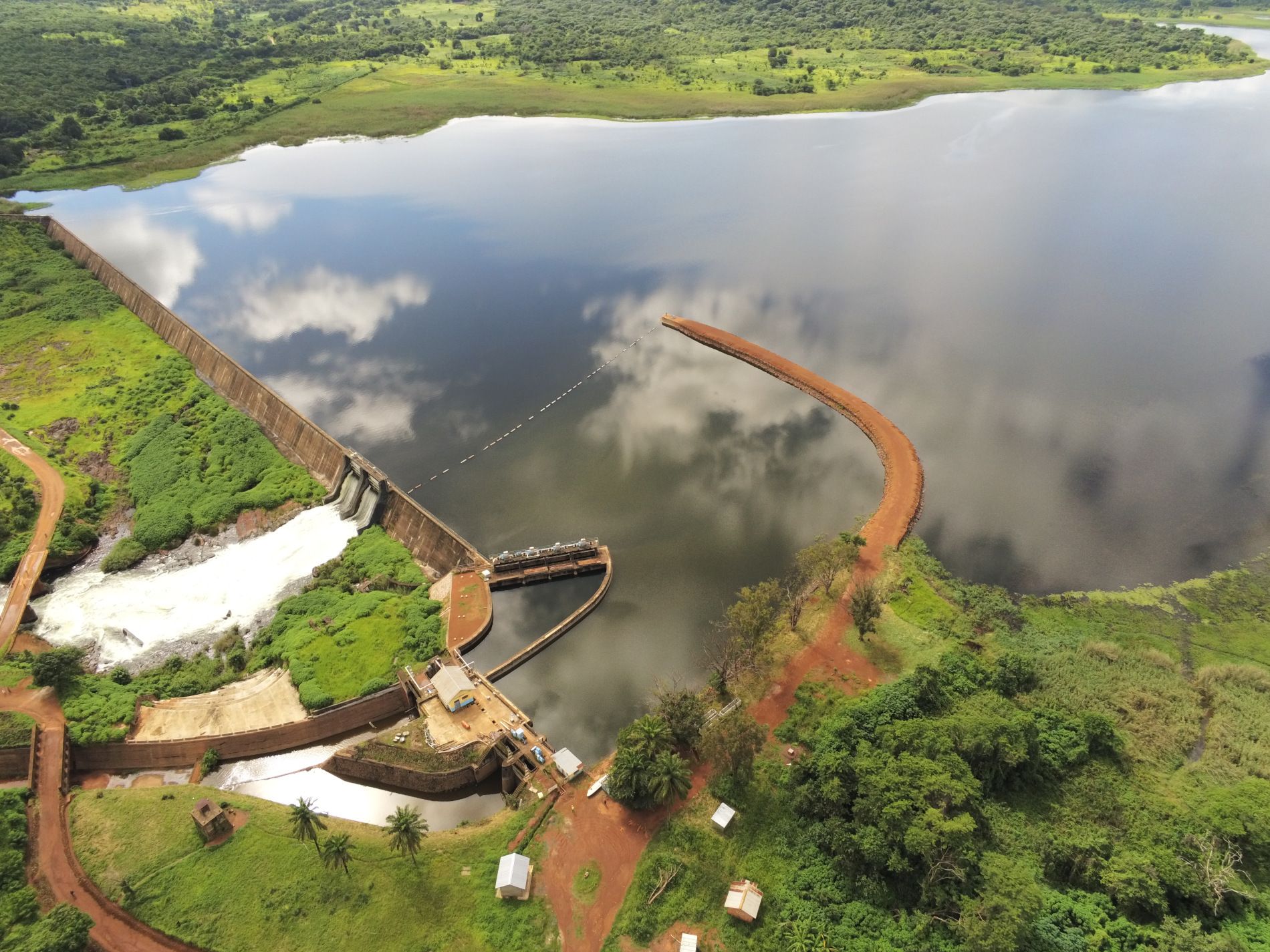
The Kamoa-Kakula mines will be powered with clean, sustainable hydro-electricity. Ongoing upgrading work at the Mwadingusha hydro-power plant in the DRC is expected to deliver approximately 72 megawatts (MW) of power to the national power grid by early 2021.
The work at Mwadingusha, part of a program to eventually boost output from various hydropower plants to approximately 200 MW, is being conducted by engineering firm Stucky of Lausanne, Switzerland, under the direction of Ivanhoe Mines and Zijin Mining, in conjunction with the DRC’s state-owned power company, La Société Nationale d’Electricité.
In addition, approximately 55% of the Kakula's tailings will be mixed with cement and pumped back underground to fill voids and help support underground mine, which will provide for a much smaller tailings facility.
The DRC advantage extends beyond grade, power and infrastructure into the exciting, energetic young workforce emerging as the next generation of great geologists, miners and engineers.
More than 4,500 employees and contractors currently are working to construct the new Kakula Mine and approximately 90% are Congolese nationals. We are proud to be training a new generation of young Congolese women and men to safely operate the modern, mechanized copper mines being built at Kamoa-Kakula.
We also are committed to empowering and supporting the communities where we operate. For example, the Kamoa-Kakula Sustainable Livelihoods Program was started in 2010 in an effort to strengthen food security and farming capacity in the host communities by establishing an agricultural training garden and support for farmers at the community level.
Today, approximately 350 community farmers are benefiting from the program, producing high-quality chicken, fish, eggs and vegetables for their families, and selling the surplus for additional income.
At Ivanhoe, we place great value on responsible development and sustainability at our operations. We recently released our 2019 Sustainability Report, which speaks to the great work we are doing at all three of our principal projects: the Kamoa-Kakula copper project in the DRC; the Platreef platinum-palladium-rhodium-gold-nickel-copper project in South Africa; and the historic Kipushi zinc-silver-germanium mine, also in the DRC.
A sustainable and secure supply of critical metals for clean technologies – such as copper, PGMs and nickel – is one of the most important hurdles to overcome as we embrace an electric future.
Ivanhoe is strategically advancing Platreef and Kipushi to supply a spectrum of green metals to global markets, including copper, platinum, palladium, nickel, rhodium, zinc and germanium.
We have recently completed the sinking of Shaft 1 at Platreef to a final depth of 996 metres below surface. Our team now is exploring development strategies via Shaft 1 that could expedite Platreef’s near-term production, while limiting upfront capital and maintaining our robust balance sheet.
We are confident that the project will, in time, become one of the world’s largest and lowest-cost primary producers of platinum-group metals and provide long-lasting and meaningful benefits to all of our stakeholders, including the 20 local communities − comprising approximately 150,000 local Mokopane area residents – that are our equity partners.
Given the extremely high zinc grades at Kipushi joint-venture project in the DRC, the mine has the potential to become one of the world’s largest and lowest-cost zinc producers, while also producing significant quantities of copper, silver and germanium. In recent years, we have made major strides towards completing the project’s infrastructure upgrading program and we are much closer to achieving our vision of building a world-class zinc operation at Kipushi.
Finally, to all of our African brothers and sisters, you now can clearly see the fruits of the incredibly intensive efforts by our people over the past two decades. We have overcome countless challenges, to initially discover, then extensively expand, the Kamoa-Kakula and Platreef resource bases with a massive drilling and engineering effort.
Ivanhoe is not a conventional mining company. Our team is building something different and exciting. We are committed to discovering and developing modern, leading-edge mines that provide secure, socio-environmentally responsible access to key raw materials.
On behalf of our entire board of directors, thank you again for being a shareholder.
Sincerely,
Robert Friedland,
Founder, Executive Co-Chairman
Yufeng “Miles” Sun,
Non-Executive Co-Chairman
Aerial view of the Mwadingusha dam, upstream from the Mwadingusha hydro-power plant in the DRC. The upgrading program is restoring the plant to its installed output capacity of approximately 72 megawatts of clean, sustainable electricity.